Timeless Skies: Using Vintage Hot Air Balloon Backgrounds in Modern Design
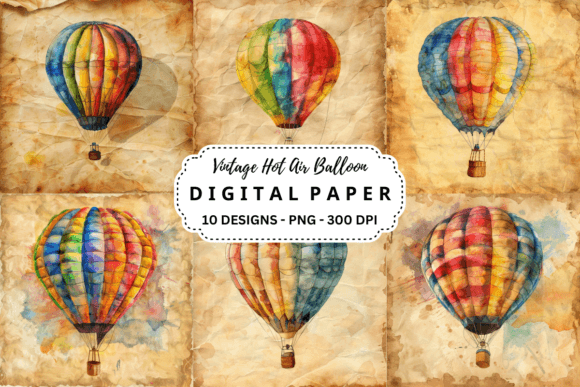
There is a distinct romance attached to the golden age of aviation, specifically the era of the Montgolfier brothers and early aeronauts. It evokes a sense of wonder, exploration, and nostalgia that modern graphics often struggle to replicate. This is precisely why Vintage Hot Air Balloon Backgrounds have become such a powerful tool in the creative arsenal. These assets are not just pretty pictures; they are gateways to a specific aesthetic that blends Victorian illustration styles with the open expanse of the sky. As a designer or creator, having access to a high-quality set of these graphics—specifically a collection of 10 individual, high-resolution PNG files—offers a versatility that few other design assets can match.
The Visual Character of Retro Aeronautics
When we talk about the "vintage" aesthetic in this context, we aren't simply referring to a sepia tone or a grainy texture. The personality of these backgrounds lies in the intricate details of the balloon envelopes and the distinct rendering of the basket structures. The style often mimics antique engraving or hand-colored lithography, offering a textured, organic feel that contrasts sharply with the sleek, vectorized look of modern branding.
The appeal is rooted in authenticity. In a digital world saturated with perfect gradients and clean lines, the imperfections and hand-drawn quality of Vintage Hot Air Balloon Backgrounds provide a breath of fresh air. They carry a narrative weight, suggesting adventure and the pioneering spirit. This visual personality works exceptionally well for brands that want to appear established, trustworthy, and rich in heritage, even if they are startups. It is a creative font for the eyes—communicating a mood before a single word is read.
Strategic Applications Across Creative Industries
Because the provided files are high quality 300 DPI with dimensions of 3600 x 3600 pixels, they bridge the gap between digital and physical media seamlessly. You do not need to worry about pixelation when scaling up for large-format prints. Here is how different sectors can leverage these assets:
- Publishing and Editorial Design: For magazine covers, book jackets (particularly for fantasy, historical fiction, or travel genres), and blog headers, these backgrounds provide an immediate sense of place and time. They act as a perfect backdrop for serif font typography, reinforcing the classic vibe.
- Branding and Packaging Design: Artisanal brands, craft breweries, or boutique bakeries often rely on a "handmade" aesthetic. Incorporating a hot air balloon motif into packaging design or logo design can elevate a product from generic to premium. It suggests that the product inside is worth the journey.
- Digital Marketing and Social Media: In the fast-scrolling environment of social media graphics, visual stop-power is everything. These backgrounds serve as excellent templates for Instagram posts, Facebook banners, or Pinterest pins. The intricate details encourage users to pause and look closer, increasing engagement time.
- Stationery and Print on Demand: The utility extends deeply into scrapbooking, invitations card design, and wrapping paper. The seamless nature of the high-resolution files makes them ideal for print on demand design projects, allowing entrepreneurs to create printing labels and merchandise without worrying about image quality loss.
Visual Hierarchy and Brand Perception
Choosing a background is rarely just about filling white space; it is about establishing a visual hierarchy. When you use Vintage Hot Air Balloon Backgrounds, you are setting a specific stage for your foreground elements. If you pair these textured, organic backgrounds with a clean sans serif font, the contrast creates a dynamic tension that is very pleasing to the eye. The background provides the warmth and emotion, while the typography provides the clarity and modernity.
This balance influences brand perception significantly. A brand using these assets communicates a sense of professionalism and attention to detail. It suggests that the creator values aesthetics and understands the power of atmosphere. For web design, using these as section dividers or hero image backgrounds can break the monotony of flat design, adding depth and texture that makes the user experience feel more tactile and immersive.
Practical Guidance for Implementation
To get the most out of this collection, you need to treat them as design assets rather than just decoration. Here are some practical tips for integration:
- Evaluating Project Fit: Before dropping an image into a layout, ask if the mood aligns with the message. These backgrounds suit themes of travel, dreams, history, luxury, and whimsy. They might not fit a hyper-modern tech startup or a gritty industrial brand.
- Font Pairing Strategies: Because the backgrounds are visually complex, your typography needs to stand out. Avoid using highly decorative script fonts or handwritten fonts that might get lost in the illustration details. Instead, opt for a bold display font with good legibility or a structured serif font to maintain a classic brand identity.
- Layering and Overlays: Don't be afraid to manipulate the files. Since they are PNGs, you can lower the opacity to create a watermark effect or apply a color overlay to match your specific brand palette. You can also use blending modes in software like Photoshop to merge the balloons with clouds or other textures for a modern typography layout.
- Testing for Readability: Always test your text over the image at various sizes. Ensure that the busy parts of the balloon illustration don't clash with the kerning or tracking of your letters. Sometimes, placing a semi-transparent shape behind the text is enough to ensure readability without obscuring the vintage art.
Leveraging Assets for Commercial Success
For entrepreneurs and small business owners, the value of a premium font or graphic pack lies in its licensing and adaptability. Using high-quality assets like this collection ensures that your output—whether it is a banner for a local market or a digital ad campaign—looks polished. It removes the "amateur" look that often plagues DIY designs.
Consider the consistency of your brand identity. By using elements from this specific set of backgrounds across different touchpoints—from your website header to your business cards and product tags—you create a cohesive visual language. This repetition builds recognition. When a customer sees that distinct balloon illustration, they immediately associate it with your brand's story of adventure and quality.
Ultimately, these backgrounds are more than just images of balloons; they are tools for storytelling. They allow content creators, marketers, and designers