Unlocking Nostalgia: The Power of Vintage Halloween Backgrounds
There is a specific kind of magic in the Halloween imagery of the past. Before the era of neon-green slime and hyper-realistic CGI monsters, horror was painted in sepia, ink, and muted watercolors. It was an era of shadowy corners and implied terror, where a simple black cat silhouette or a floating ghost sheet held a profound, atmospheric weight. If you are a designer, content creator, or entrepreneur looking to capture that specific, textured aesthetic for your projects, relying on modern stock photos often falls flat. The clean, digital perfection of modern photography lacks the grit and history that defines the gothic holiday. This is where the tactile nature of Vintage Halloween Backgrounds becomes an indispensable asset.
The Anatomy of the Aesthetic
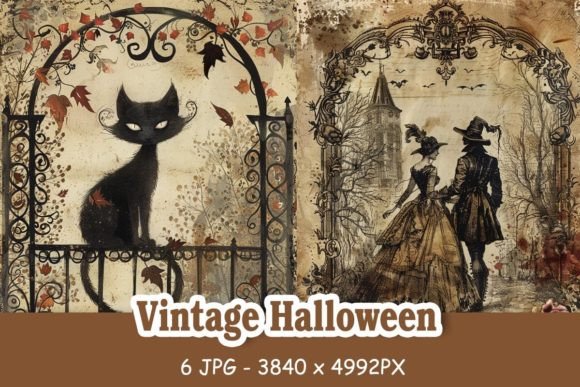
Understanding the visual language of these assets is key to using them effectively. The collection of Vintage Halloween Backgrounds we are exploring here is not merely a set of filters; it is a curated gallery of digital art that mimics the physical degradation and artistic style of early 20th-century illustrations. The core personality of these backgrounds relies on "texture" and "tone." You are not just getting a picture of a pumpkin; you are getting a representation of a pumpkin drawn on aged paper.
Take, for example, the Spooky Black Cat background. In modern design, a black cat is often sleek and vector-based. Here, however, the cat is rendered with the soft, indistinct edges of an ink wash, sitting upon paper that has clearly lived a life of its own. The "aged, textured paper" mentioned in the description is crucial. It provides a built-in grain structure that adds depth to digital designs, preventing them from looking flat or sterile. Similarly, the Haunted Ghosts background uses intricate detailing that feels handmade. This imperfection is the selling point. It communicates authenticity and a respect for the craft of illustration that resonates with audiences who appreciate artisanal quality over mass-produced digital gloss.
Integrating Texture into Modern Workflows
As a creative professional, your goal is to bridge the gap between this historical aesthetic and your client's modern needs. These backgrounds function as more than just scenery; they are foundational design assets. When working with a resolution of 300 DPI at 3840 x 4992 pixels, you have the freedom to use these assets across a massive variety of mediums without losing quality. This high resolution is essential for print projects, where pixelation can ruin the illusion of a vintage artifact.
Consider the Eerie Vintage Couple background. The muted sepia tones make it an incredibly versatile layer for editorial design. If you are a publisher working on a book cover for a gothic mystery novel, this image provides an immediate atmospheric shorthand. You don't need to build a complex scene from scratch; the background does the heavy lifting, allowing your typography to sit comfortably on top of the noise and texture. For web designers, these JPGs serve as excellent "hero" sections for landing pages. They provide a rich, visual anchor that holds the user's attention, creating a mood that a standard flat color or gradient simply cannot achieve.
Strategic Applications for Branding and Marketing
For small business owners and marketers, seasonal branding can often feel repetitive. How many times can we use the same clipart pumpkins? Vintage Halloween Backgrounds offer a way to pivot your brand identity toward a more sophisticated, "gothic chic" or "cottagecore" vibe. This is particularly effective for brands in the lifestyle, artisan food, or boutique retail sectors.
Imagine you are a candle maker launching a limited-edition "October" scent. Using the Marigold Bouquet in Pumpkin Vase background for your social media graphics and packaging inserts creates an immediate emotional connection. It suggests that your product is rooted in tradition and natural beauty, rather than commercial fright. In the realm of logo design, while you wouldn't use a raster image as a logo itself, these backgrounds are perfect for mockups. Placing a minimalist, sans-serif logo on top of the Spooky Black Cat background allows you to visualize how a modern, clean brand identity interacts with a textured, vintage environment.
Practical Guidance for Designers and Crafters
When incorporating these assets into your workflow, think about visual hierarchy. Because these backgrounds are detailed and "busy" by nature, your foreground elements need to be distinct.
- Typography Pairing: Avoid using overly decorative or handwritten fonts for body text on top of these backgrounds. The texture of the paper can clash with the loops of a script font, reducing readability. Instead, pair these vintage backgrounds with a clean sans serif font or a sturdy serif font. The contrast between the clean, geometric modern typeface and the organic, aged illustration creates a striking visual tension that looks professional.
- Opacity and Blending: Don't be afraid to lower the opacity of the background or apply a "Multiply" blending mode in Photoshop. This allows the paper texture to integrate with your actual project paper or canvas color, making the design feel more cohesive.
- Commercial Use and Licensing: For scrapbookers and card makers, the value lies in the instant download and print-ready nature of the files. However, if you are a commercial enterprise, ensure you understand the licensing. These assets are perfect for physical products like greeting cards, party invitations, and printed menus. The 300 DPI resolution ensures that even small text on an invitation remains crisp, which is vital for packaging design and print collateral.
Beyond the Holiday: Year-Round Potential
While marketed for Halloween, the appeal of Vintage Halloween Backgrounds extends into the broader "Dark Academia" or "Victorian Gothic" aesthetic that remains popular in social media graphics and interior design. The Haunted Ghosts image, with its intricate ink detailing, is just as suitable for a poetry blog or a vintage clothing brand's newsletter as it is for a Halloween party flyer.
When evaluating the fit for your project, look at the color palette. The sepia tones of the Eerie Vintage Couple are neutral enough to pair with autumn earth tones—burnt orange, deep burgundy, and forest green. This allows you to use these assets for Thanksgiving or general fall branding, not just October 31st.
Ultimately, the strength of these backgrounds lies in their ability to tell a story instantly. In a digital landscape saturated with sterile, AI-generated perfection, the deliberate inclusion of "aged paper" and "muted tones" signals a human touch. Whether you are designing a wedding invitation for a gothic-themed ceremony or creating a header for a history blog, these backgrounds provide a depth of character that elevates the final product from a simple design to a piece of visual storytelling. By treating these assets as foundational layers rather than just stickers, you can unlock a level of sophistication and nostalgia that resonates deeply with a design-savvy audience.